Tuesday, 5 March 2019

Criterion D: Evaluating

Criterion D: Evaluating.

Your challenge is to design detailed and relevant testing methods, which generate data, to measure the success of the solution. ( create a table to show how you will test the final product on a scale 1-5)

Measure the success of the solution against the design specification used. 

Explain how the solution could be improved in future 

and explain the impact of the solution on the client/target audience.
Example.


Criterion D: Evaluating

Strabd (i) Design detailed and relevant testing methods that generate data to measure the success of the solution.


By the end of year 3 you should be able to

Design a wide range of effective tests to evaluate the solution against the requirements of the design specification (including expert appraisal, user trials, field testing and user observation)

1. Observation. Peer


Peer.
Design Specifications
1
Very
Poor
2

Poor
3

Fair
4

Good
5
Very good
Comments
Animation will have five characters


The animation had  characters; two boys and three girls dressed in AKAM uniform of gray and white.
Animation will have black and white background


Animation will have six props


First scene will be in classroom


Second scene will be at the tuck shop


Mr. Charles will drop on the ground


Students will be talked to after the incident


Toatal score
29/35


Client/ Target Audience
Design Specifications
Very
Poor
2

Poor
3

Fair
4

Good
5
Very
Good
Comments
Animation will have five characters


Animation will have black and white background


Animation will have six props


First scene will be in classroom


Second scene will be at the tuck shop


Mr. Charles will drop on the ground


Students will be talked to after the incident


Toatal score
30/35


    Strabd (ii) Measure the success of the solution against the design specification

    By the end of year 3 you should be able to:

    • Add all scores and determine which design specs were achieved ( 4 -5) and which ones were not (1-3)


    Test against design specifications
     Specifications Yes/No How is it met?
    Must have at least 3 sections for putting different types of writing utensils 5/5There are three sections for putting different types of writing utensils: one big section and two small sections
    Must have enough space for storing at least 20 pencils 5/5One of the small sections of my product can store 40 pencils
    Must have 1 drawer for storing erasers that can store at least 3 small erasers 5/5My drawer can stored 4 erasers
    The design theme must be aesthetically pleasing to a female teenager around 14 to 16 years old. The color theme will be plain solid color 3/5According to the survey results, 6 people said the design is excellent and 5 said it is good. Some say that the product is too plain
    The depth of each section must be at least 11 cm drop5/5The long section is 11cm deep and the small ones are 14cm deep
    Must be made out of wood5/5The product is made of plywood
    Must be joined well using glues and screws/nails5/5The product is joined using latex glue and nails (from nail gun)
    Must be completed within the time given (the create part)5/5The product is completed within the given time below
                                          Recording the results of tests against the design specifications example

    Strand (iii) Explain how the solution could be improved

    By the end of year 3 students should be able to:

    Explain, in detail, how the identified weaknesses and limitations of the solution could be improved in the product.( those you scored less than a 4)


    •  Weakeness Improvements

      Appearance and texture of the pasta dish
      The appearance and texture of the pasta was not that great as we would have liked it to be. The design clearly wanted our pasta to be surrounding the sauce, but a minor mistake made us change the appearance so I am disappointed. The texture, consequently, was also ruined due to our poor quality sauce which was too thick. We were hoping to fix that mistake from the first time, but unfortunately, it did not work out the second time either.
      Cooking errors
      We did not identify some things correctly such as when the water was actually boiling because we accidentally put the pasta in non-boiling water so we need to be more focussed to fix that.
      If I had a chance to redo this dish, I would definitely have done this twice and used the first time as a learning experience to fix all my mistakes and not repeat them again such as the thickness of the pasta cream sauce. I will also try and practice basic skills such as boiling at home beforehand so I can perform it correctly in school. I think I just need to cook more to get more experience with these sort of things which will lead to a perfect dish. Since pasta is eaten quite often, maybe next I would try and create my own dish that will excite my target audience a bit and give them something different to what they usually have.
                  Write in a detailed paragraph or detailed table                                                        


    Strabd (iv) Explain the impact of the solution on the client/target audience


    By the end of year 3 students should be able to:

    explain the impact of the solution on the client or target audience

    To identify or predict the impact that a solution will have on a client or target audience, you must refer to the original problem, the design brief, the specification and the evaluation. You should use these aspects to draw conclusions about how well the design brief has been met. These conclusions may be presented in written form, as a list or as a table.
    The following questions may help you to explain the impact of the solution on the client or target audience.

    Wednesday, 6 February 2019

    Criterion C: Creating The Solution

    Follow the checklist below as you work on the creation of your solution


    • The Plan:
      • I have constructed a logical plan (a step-by-step procedure) for the creation of the solution.  (sufficient for peers to be able to follow)
      • I have stated the resources that will be needed.
      • I have completed a timeline / Gantt chart
    • The Creation Process:
      • I have demonstrated excellent technical skills when making the solution.
      • I have fully justified changes made to the chosen design and plan when making the solution.
    • Process Journal: 
                            I have maintained a process journal through the entire creation process.
      • I have explained the tools and techniques used in the process of creation.
      • I have included evidence in the creation phase that I have followed my time plan.
      • I have reflected any changes I made to my plan during the creation phase.
      • I have included screen shots and other photographic evidences of the key phases of creation.
      • I have kept notes in my process journal about how well I worked, problems encountered, and use of time - to be used in the evaluation.
    • The Final Project: I have presented the solution as a whole, either in electronic form, or through photographs of the solution from different angles, showing details.
    • Evaluate: I have evaluated and reflected on my performance in the this stage.
      • Challenges and successes
      • Areas of concerns
      • The strengths and weaknesses.
      • Observations on how this stage could have been improved.
      • General reflections 


    Requirements for each strand 


    By the end of year 3 you should be able to:


    • construct a series of logical steps to create the solution, using charts, diagrams and text that include aspects of quality control and quality assurance
    • construct a plan to create the solution that makes effective use of resources and time
    • construct a clear and concise plan that peers will be able to follow to create the solution

    (ii) Demonstrate excellent technical skill when making the solution


    At the end of year 3 you should be able to:

    • develop manipulative skills to effectively use a wide range of tools, techniques and equipment
    • use a wide range of tools and equipment proficiently to create high-quality solutions
    • ensure a safe working environment for themselves and others
    By the end of year 3 you should be able to:
    • independently follow the plan to produce the solution, which functions as intended
    • manage time effectively to produce the solution to the deadline stated in the plan

     ( strand 2 and 3. At-least 6 Pages)

    (iv) Fully justify changes made to the chosen design and plan when making the solution

    By the end of year 4 you should be able to: Pages 2 or 3 pages

    Wednesday, 30 January 2019

    Table of requirements

    A. Table of requirements based on design specs/ .

    Step
    Task
    Requirement/ Description
    Resources/materials
    1.
    Signup to Wix   

    •        -  Signup an account onwww.wix.com
    •        - Remember user name and password.
    •        - Choose the domain name:www.victorwamurwa.wix.com
    •      - Type the Title of the website; 
    My Culture My Choice.
    -internet
    - Wix web builder
    - computer
    2.
    Login to Wix          account

    • -          Use the username and password to login.
    • -          Scroll through the templates and layouts.
    • -          Select a layout with Blue and Yellow colors
    - internet
    - Wix web builder
    - computer


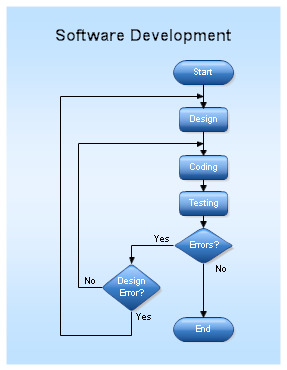
    B. Flowchart Symbols

    checkout the following link for more on flow chart. http://www.smartdraw.com/flowchart/.of interest when interacting with the site above is the a) flowchart examples and b) flowchart symbols.

    Take a case example of someone developing a database to:

    i) capture records of books in the library

    ii) register library users

    iii) handle borrowing and returning of books


    .


                                          Sample flowcharts.

    1. website        flowchart


    Wednesday, 23 January 2019

    Criterion B: DEVELOPING IDEAS

    Criterion B: Developing Ideas

    At the end of year 5, students should be able to:

    i. develop design specifications, which clearly states the success criteria for the design of a solution


    ii. develop a range of feasible design ideas, which can be correctly interpreted by others

    iii. present the chosen design and justify its selection


    iv. develop accurate and detailed planning drawings/diagrams and outline the requirements for the creation of the chosen solution.


    Strand i)

    i)   develop design specifications, which clearly states the success criteria for the design of a solution
    -      The design specs should be measurable with a clear way on how the specs will be tested.
    -      The specification should be directly connected to your design brief. 

    Example: Game Product
    Specification
    Test
    Game will be less than 1 MB in size
    Install it in a computer  the size in properties
    Played by two players (Multiplayer game)
    Allow two players to play simultaneously
    The game 3 levels that will advance in complexity.
    Play the game at each level time the duration it takes to complete a level and record the complexities.


    Maximum of 2 pages

    Strand ii) 
    ii) develop a range of feasible design ideas, which can be correctly interpreted by others

    - Develop a range of good quality designs and measure each of them against the design specs.
    Your description for each design should be detailed and clear and use captions on images or diagrams which are not clear.
    - Annotate  the designs with sufficient detail to explain how they meet the requirements of the design specification and to explain design thinking

    -  Develop only TWO designs

    Sketches
    https://sketchboard.io/

    https://sketch.io/sketchpad/

    Examples of Designs

    Clothing sketch by ES Kim at Coroflot.com


    How Specs are used in Tech Packs - How to Spec a Garment eBook - Learn how to measure apparel for fashion spec sheets & tech packs - fully illustrated guide $34.95. #techpacks #specsheet #fashiondesign #fashionspecs

    Maximum of  7 pages


    Strand iii)

    iii.           present the chosen design and justify its selection
             -      State the chosen design from the two designs.
             -      Provide detailed justification why the design was chosen.
             -      Suggest possible improvements to the chosen design. 
             -      If possible show the chosen design with the improvements included as a final design.

    Maximum of  2 pages 


    Strand iv)
    iv.           develop accurate and detailed planning drawings/diagrams and outline the requirements for the creation of the chosen solution.
              
              The above can be achieved using either of the following tools
               a) Table of requirements.
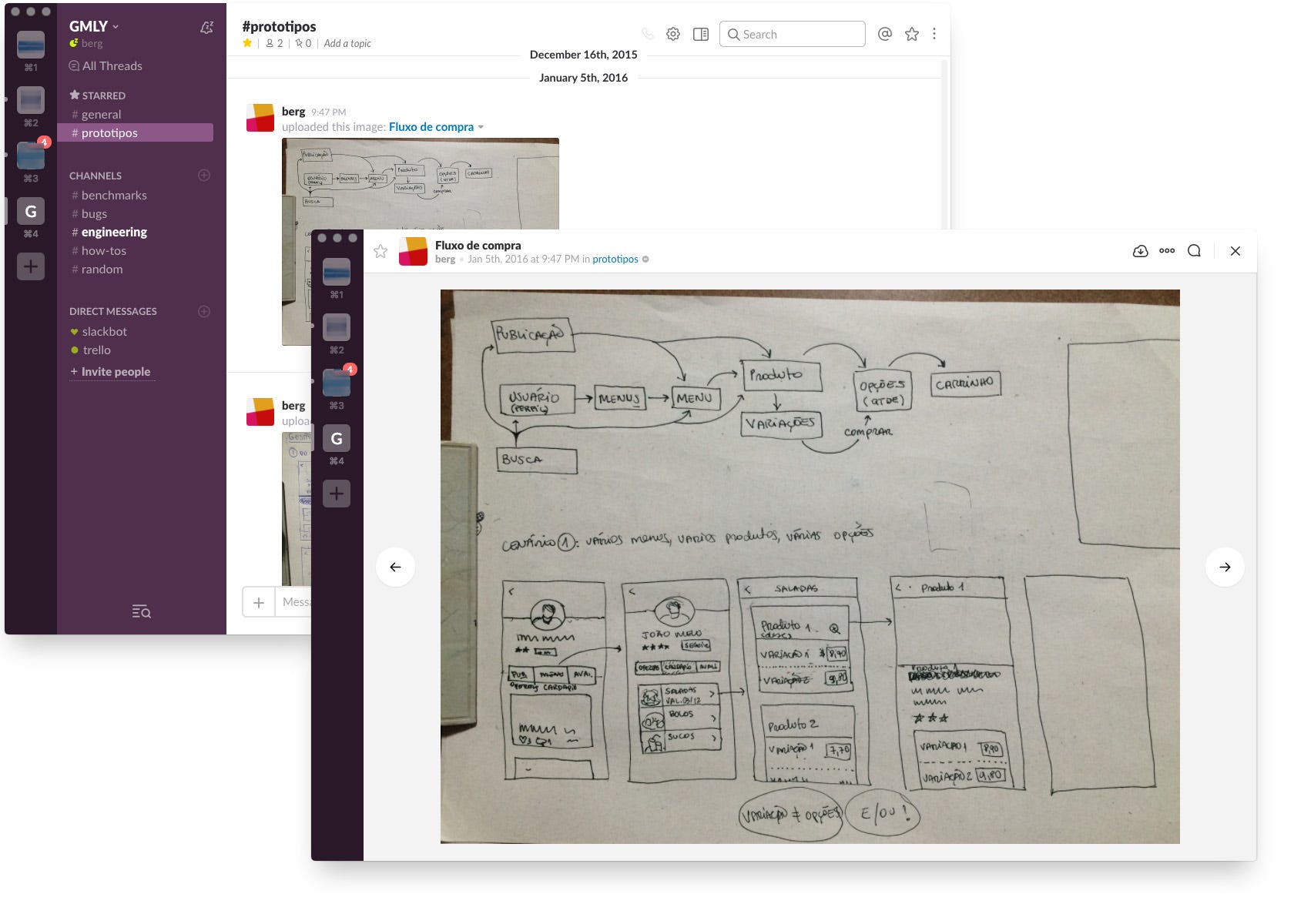
    b)  Flowchart
    c)  Site Map


     This should not be confused with the designs developed and justified. This is the process detailing the requirement for the creation of the chosen solution.  

    Site Map
    Image result for Site map sketches

    Flowchart Sketching software
    https://www.digikey.com/schemeit/project/

    Site Map Builders
    https://www.gloomaps.com/